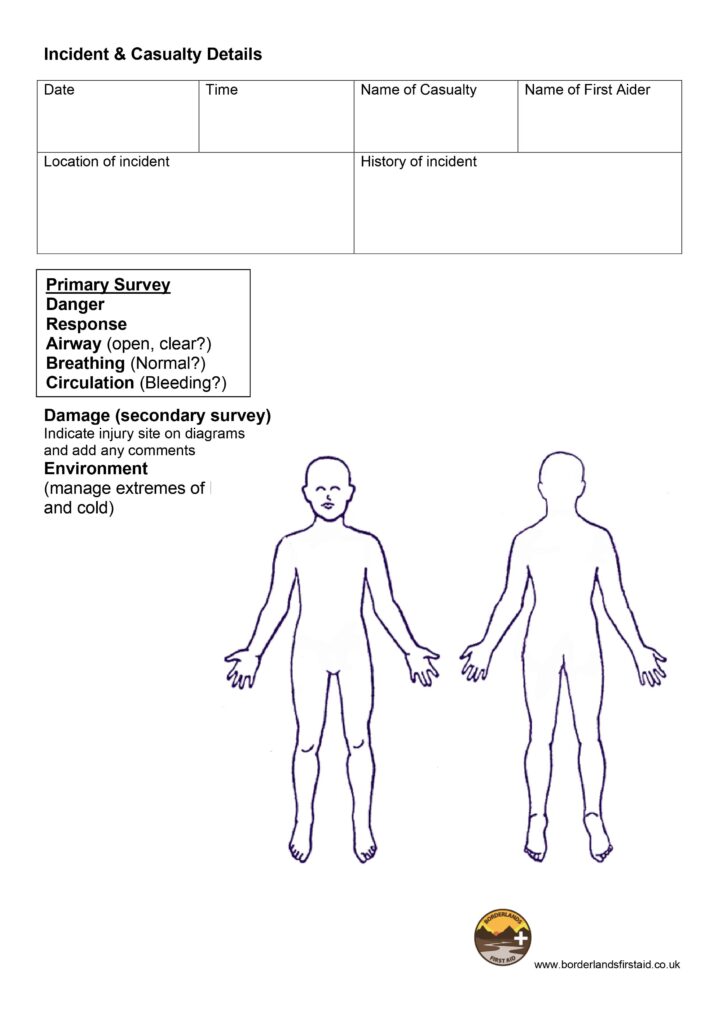
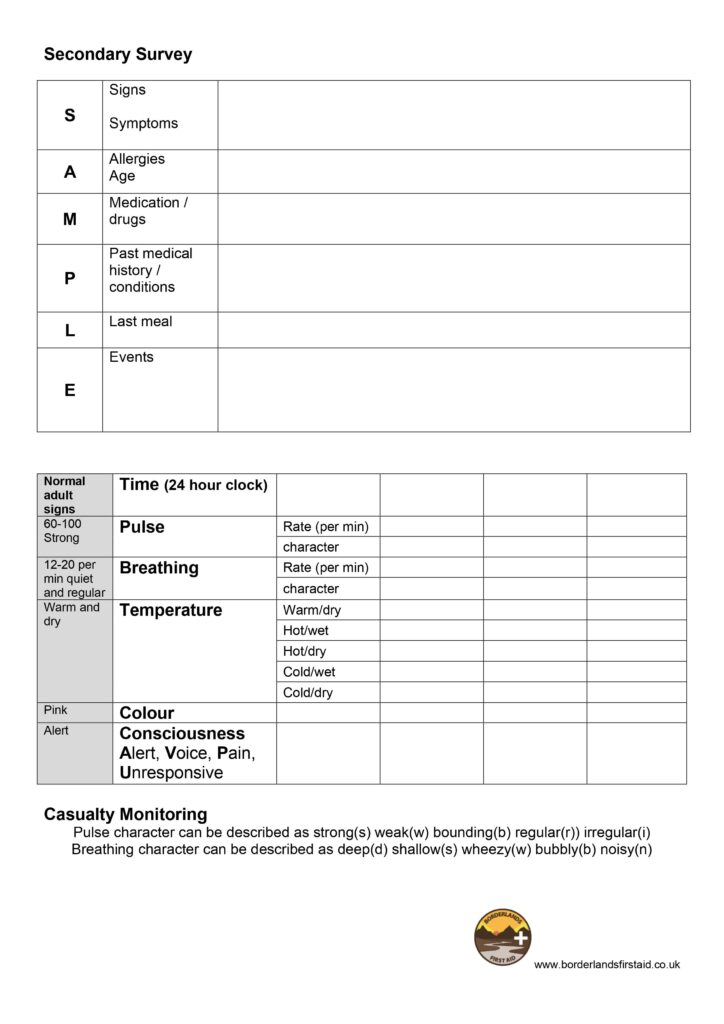
One of the questions we’re asked on most of our courses is “what should I have in my first aid kit?” The short answer to this is that it depends. The slightly longer answer is really based on your first aid needs assessment, together with a thought on what other equipment you’re already carrying that could serve more than one purpose. Despite this, the one item we always advise having in a kit is a casualty monitoring card, or cas card for short.
What is a cas card for?
Candidates on our first aid courses frequently tell us that they found the course, but worry about remembering everything they’ve learned. We don’t think it’s reasonable to expect a first aider to remember every detail for the 3 years until your qualification expires, and some things are just too important to rely on remembering. That’s one of the benefits of a casualty card, acting as a prompt to remind you of what you should be checking and in what order – the primary survey.
Our casualty assessment doesn’t however end with the primary survey. Particularly in an incident when qualified help is likely to be delayed, the ability to assess and monitor a casualty’s vital signs is a crucial skill in a first aider’s toolkit.
Top tips with casualty cards
- First aid in the outdoors is a wet and muddy place. Having a casualty card on waterproof paper is a huge help!
- First aiders have enough to think about without worrying about record keeping as well – give the card to an assistant or bystander, and ask them to make records and remind you if you’ve forgotten anything.
- Have more than one cas card! If you run out of space on the first one, start the next one
- Hand it over: Your cas card is a valuable record that should be of interest to the medical professionals later in the incident, so pass it on with a brief summary of what’s happened and what you’ve done. Unfortunately, on some occasions you may not be given the opportunity to hand over, but don’t feel too put out, you’ve still done the right thing by monitoring and recording.
- Make sure it works for you: There are lots of versions of cas cards available; ours is shown here or you can download a word version, but make sure that whatever you have works for you. It needs to be simple, clear and contain the right information to remind you of what to assess.
Casualty cards are genuinely useful as a prompt, record keeping document and a guide to the first aider on improvements or deterioration in a casualty; possibly one of the most useful things in your first aid kit, so stock up and make sure you have them in your kit!